
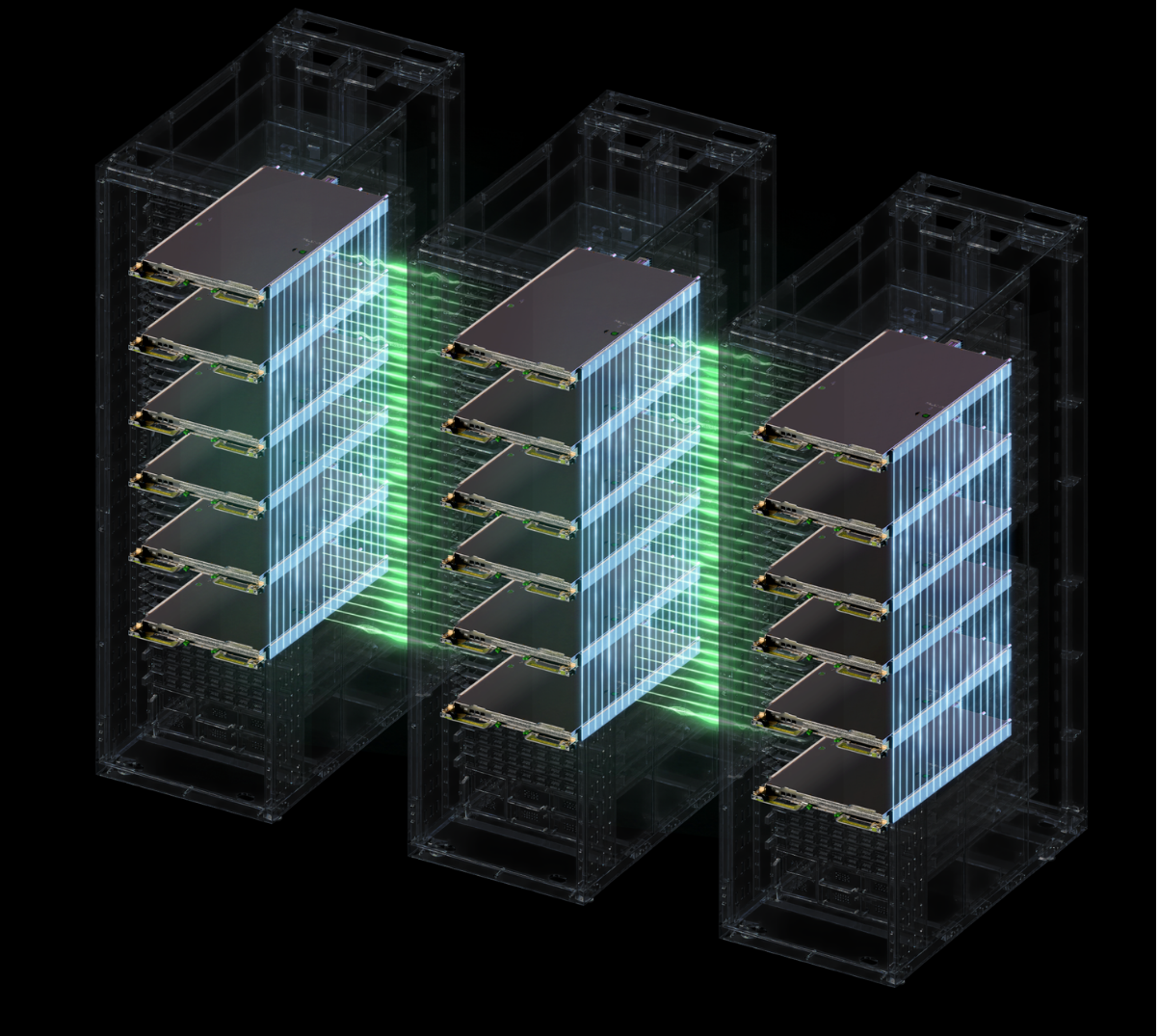
TECHNOLOGY · RIVVOR FABRIC
Make physical connectivity programmable
RIVVOR separates mechanical attachment from the high-speed data path. Modules remain securely mounted while data connections are established through controlled electromagnetic interfaces.
<10NS
Ultra-low latency
Single-hop, node-to-node, no switch buffers.
800+GBPS
Per-link throughput
Scales to more than 1 Tb/s at THz frequencies.
<5PJ/BIT
Power efficiency
Comparable to the most efficient optical I/O, with nothing to plug in.
10,000
Links per system
Self-healing multi-path mesh, with no connector to age.
Design targets, not measured production results. Feasibility is grounded in published sub-THz research, including IEEE Std 802.15.3d-2017 (100 Gb/s point-to-point PHY at 252–322 GHz).

Conventional
RIVVOR Fabric
Data interface
ConventionalMechanically mated high-speed connectors and cables.
RIVVOR FabricA controlled electromagnetic interface across a controlled gap.
Topology change
ConventionalManual recabling.
RIVVOR FabricChanged in software where the installed hardware supports multiple paths.
Module replacement
ConventionalTrace cables, disturb neighboring hardware, reseat connectors.
RIVVOR FabricReplace the module; the fabric detects, establishes and monitors its links.
Service
ConventionalHands-on routing, inspection and troubleshooting.
RIVVOR FabricLink-health monitoring and physical-path management.
Alongside
Every alternative still relies on a cable, fiber or physical mating interface. RIVVOR can operate alongside copper, optics and CPO as an additional bandwidth layer.
THE PRINCIPLE
Attachment and data, separated.
On the selected paths, high-speed data no longer depends on mechanically mated interfaces.
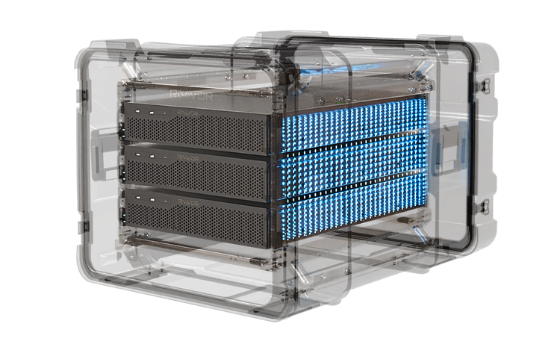
ARCHITECTURE · 01 / GUIDED
Electromagnetic corridors
Bounded Electromagnetic Corridors guide sub-THz signals through structural paths within compute pods and, where engineered for the deployment, between pods or racks. Modules couple to these paths across a controlled gap.
WITHIN PODS · POD-TO-POD · RACK-TO-RACK
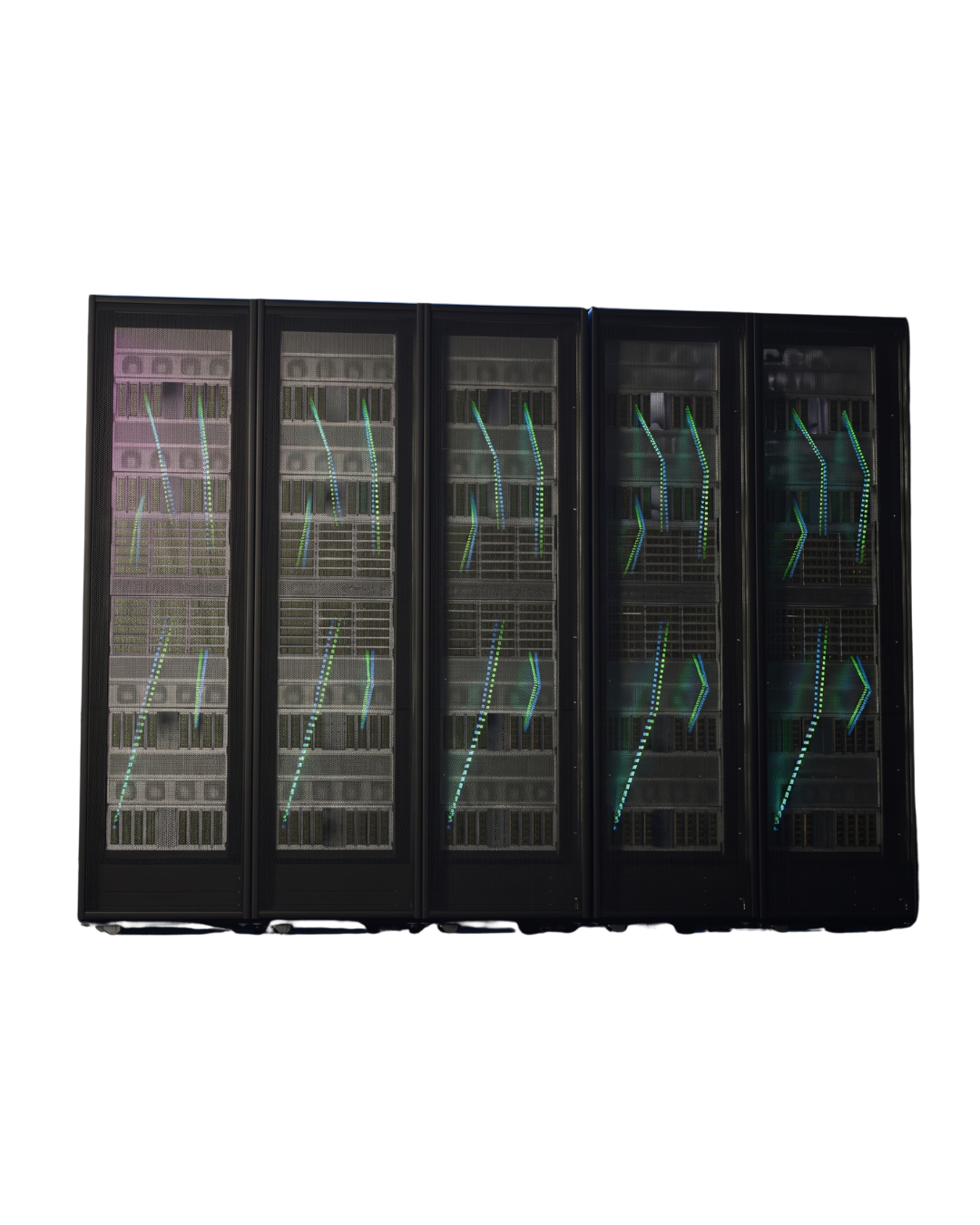
02 / DIRECTIONAL
Spatial links
Directional sub-THz links establish direct or alternate spatial paths through an engineered enclosure, where geometry and endpoints are known.
DIRECT PATHS · ALTERNATE PATHS · ENGINEERED ENCLOSURES

03 / MANAGED
Fabric control
Software establishes, calibrates and monitors available paths. Where the installed hardware supports multiple paths, connectivity can change without manual recabling.
ESTABLISH · CALIBRATE · MONITOR
Next step
See the fabric in your system.
Request a technology brief for detailed specifications, integration options and pilot terms.